The product gave members no compelling reason to return
SaverLife is a nonprofit that rewards low-income Americans for building savings habits. I was asked to weave gamification into the core experience to improve retention.
The stakes
Without returning members, SaverLife couldn’t show it helped people save, putting its funding at risk.
What did I do
Sustained behavior change, not temporary spikes
We rebuilt the core experience around new point activities.
The result
Retention doubled year over year.
Created and reinforced savings habits
Improved financial literacy
Gave members better reasons to visit every week
Business impact
The gains held for 12+ months after launch: lasting behavior change, not an engagement spike.
At a glance
Before
Scattered features, no habit formed
Members saw SaverLife as a lottery, not a savings tool
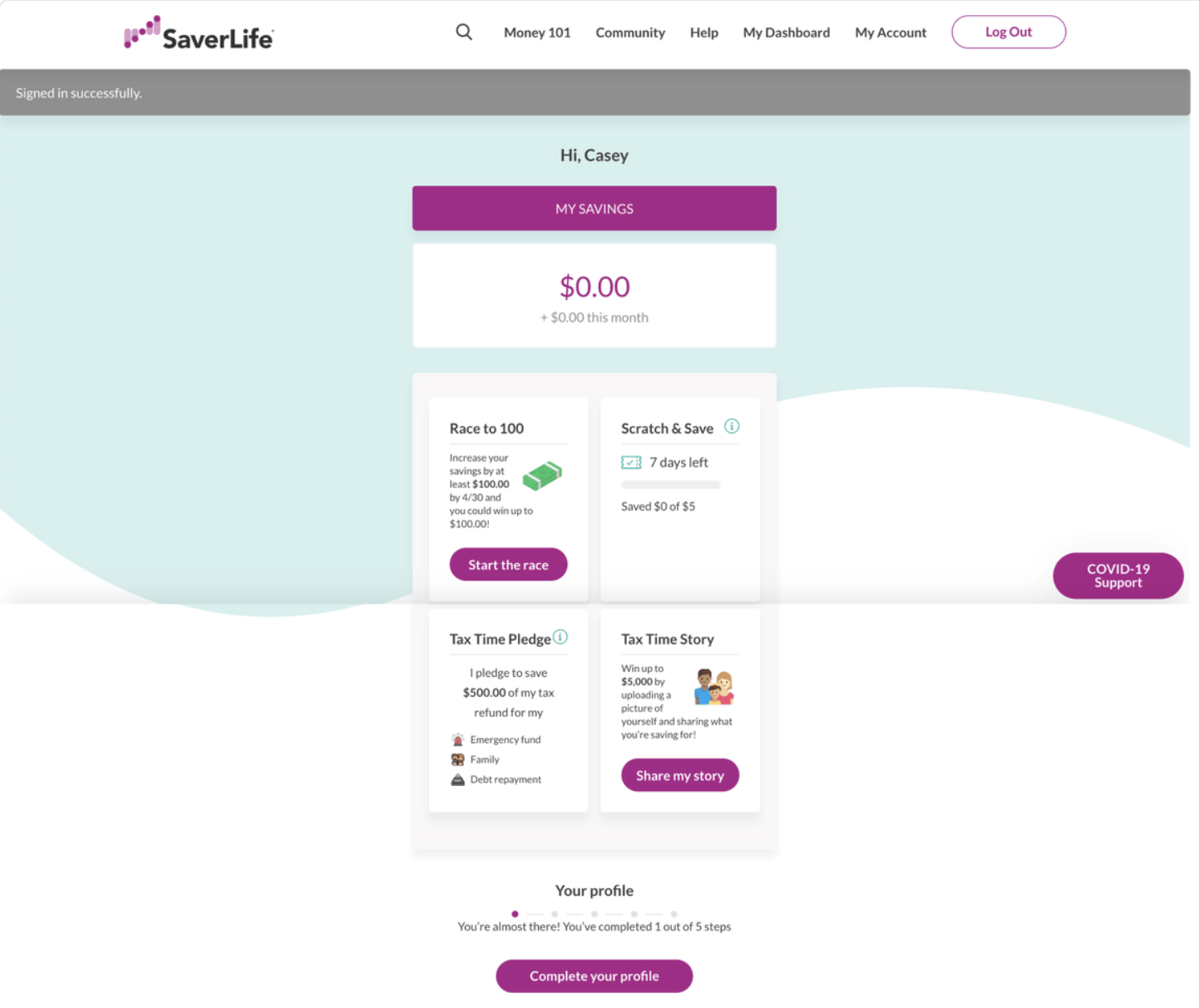
The dashboard showed only sweepstakes
Most members never found the points system
Gamification hid in the hamburger menu
No link between actions and savings progress
After
Cultivating a desire to save
Clearer navigation and dashboard visuals
Core features front and center
Point activities and a points store that create weekly habits
02
Context · Research
Money was already complicated for our members
When I joined in March 2020, our members, low-income Americans, were navigating circumstances that strained an already complicated relationship with money.
Who we designed for
Volatile, inconsistent paychecks
Supporting family on very tight budgets
Saving little, if at all
Unaware of what a savings habit could do
What they encountered
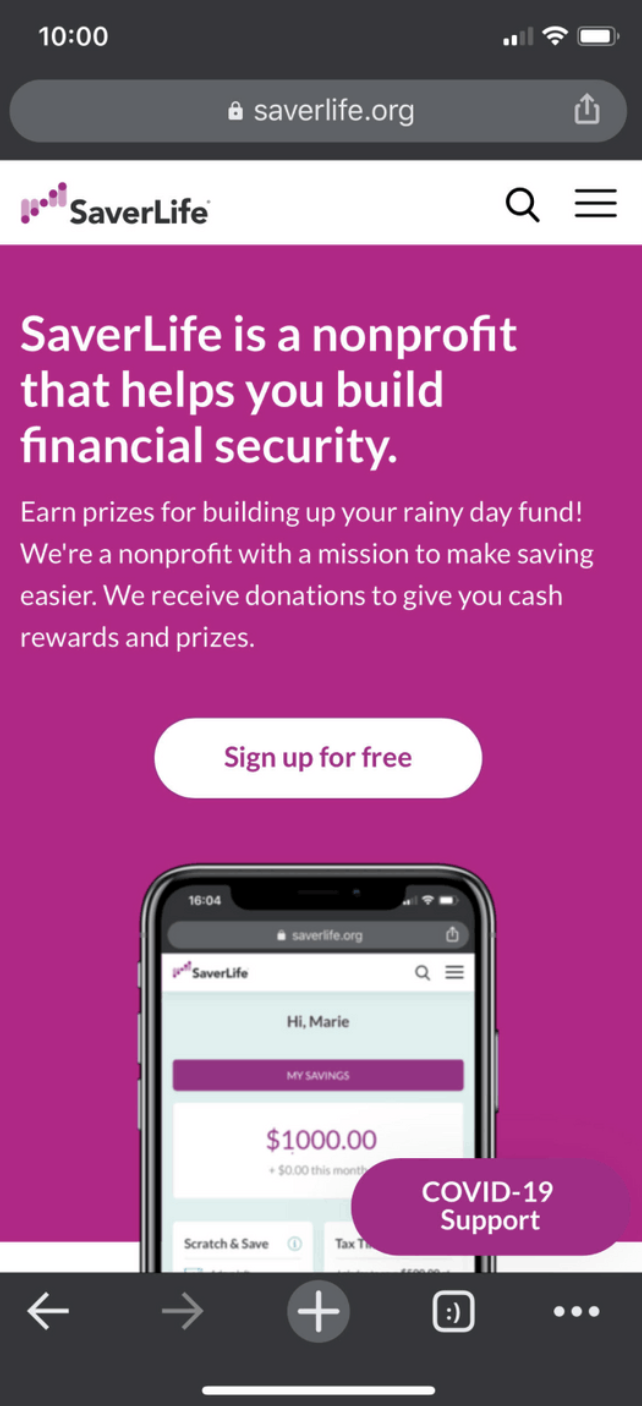
Disjointed blogs, forums and gamification
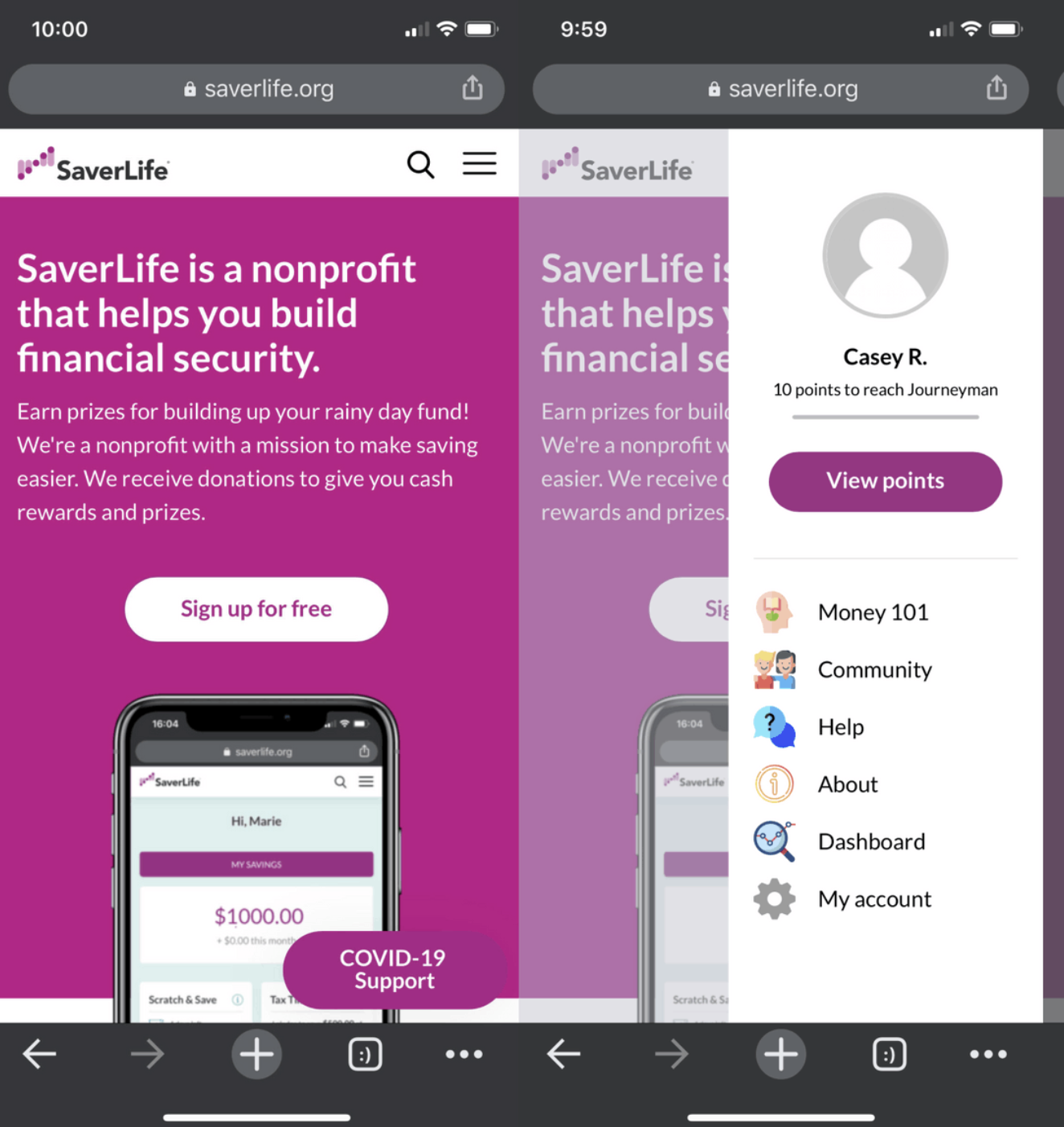
Gamification tucked in the hamburger menu
No clear link between features
The gap
The product sold a chance to win money, not the ability to save consistently. Members saw a lottery, not a savings tool.
The research
Leadership had already picked a solution
Our Chief Impact Officer wanted to “integrate gamification into the core UX.” That’s anchoring: a solution set before the problem is understood. So I started with what members were trying to do, and what stood in their way.
Framing the problem
The challenge
Low-income Americans struggle to build savings habits, and SaverLife wasn’t giving them the structure or motivation to return weekly.
For whom
Adults earning under $70K with volatile incomes, tight family budgets and varied financial literacy, in 2020’s economy.
Four linked barriers
Credibility
Transparency, like a points store and clear activities, makes SaverLife feel legit.
Impact
Trust leads members to engage with financial literacy content and act on it.
Usability
Dashboard-first content means more completed activities.
Detectability
Activities on the dashboard get discovered in week one.
Root cause
Not a usability problem. A habit-formation problem at the structural level: no recurring reason to engage, and no visible progress.
The opportunity
Mental models we needed to shift
From “Saving isn’t for people like me”
To “I can save $5 and it matters”
From “I need a stable income to save”
To “Small consistent actions build habits despite income volatility”
From “SaverLife is just a lottery”
To “SaverLife helps me build financial security”
Jobs to be done
Trigger
Unpredictable expenses: car repairs, medical bills, school supplies
Motivation
Feel financially secure despite income volatility
Outcome
An emergency fund that avoids predatory lending
Obstacles
Not knowing where to start, not saving “enough,” forgetting to save
Core job
“When I have an unexpected expense coming up, I want money set aside, so I can avoid predatory loans and keep my family stable.”
The goals
Human need
Help members feel capable of saving through structure, motivation and small daily and weekly actions.
Business need
Show funders sustained impact through retention, securing SaverLife’s ability to scale its mission.
North star metric
12-week retention rate so it could track sustained engagement.
03
Approach
Was gamification actually the answer?
Before designing anything, I tested the ask against three alternatives.
The alternatives
Education only
+ Mission-aligned, low lift. − Doesn’t change the belief “I need a stable income to save.”
Social accountability
+ Proven motivation, cheap. − Hard to bootstrap with few users; privacy concerns.
Behavioral nudges
+ Direct, proven for habits. − Needs opt-in; emails already ignored and felt spammy.
Gamification + education (chosen)
+ Variable rewards build habits; existing API; measurable. − Could feel patronizing; API limits.
The evidence
Survey feedback
“I didn’t even know you had points!” The concept wasn’t the problem. Discoverability was.
User interviews
Points “made saving feel like a game I could win” and “broke down an impossible goal into tiny achievements.”
The constraints
Technical
An existing third-party gamification API: low cost, fast launch
Business
A 1-month MVP to match the funding cycle; custom systems would take 6+ months
User
Members wary of “rewards for poor people,” so transparency was critical
Decision
Gamification was right, not because leadership suggested it, but because the data, the constraints and our members backed it.
The design
The dashboard: from lottery to habit
What wasn’t working
Issue 1 · Savings didn’t update in real time
→ Confusion and trust issues
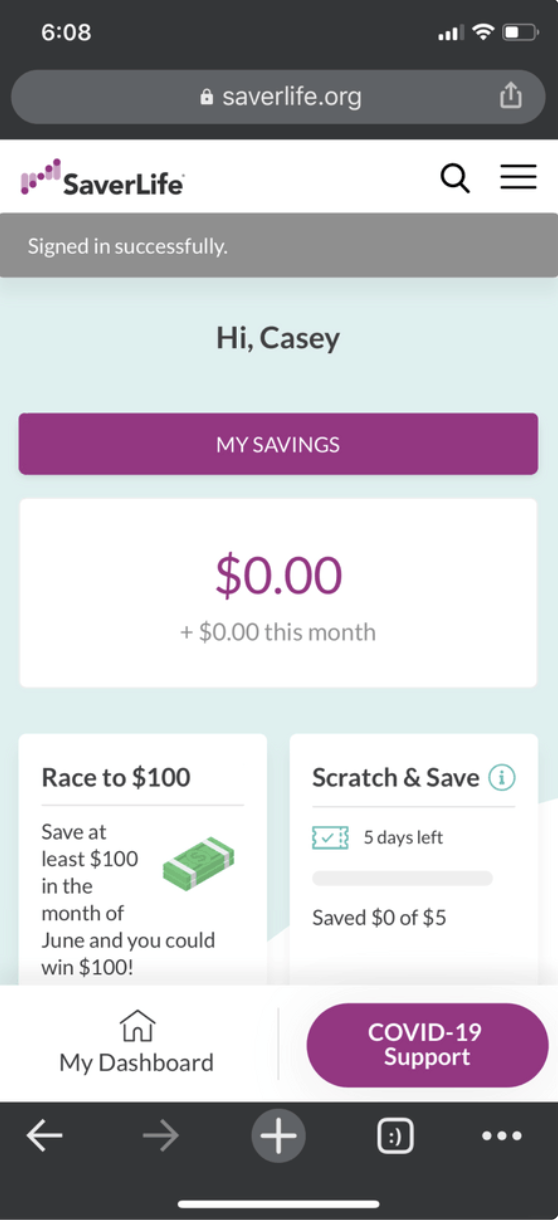
Issue 2 · Mobile nav on only two pages
→ Disorientation
Issue 3 · Members landed on the homepage first
→ Extra steps to reach anything actionable
Issue 4 · Only challenges and sweepstakes visible
→ Reinforced the lottery mental model
Keep what works
Promotions and challenges drove steady engagement, so we kept them and added the missing habit-forming structure.
What we changed
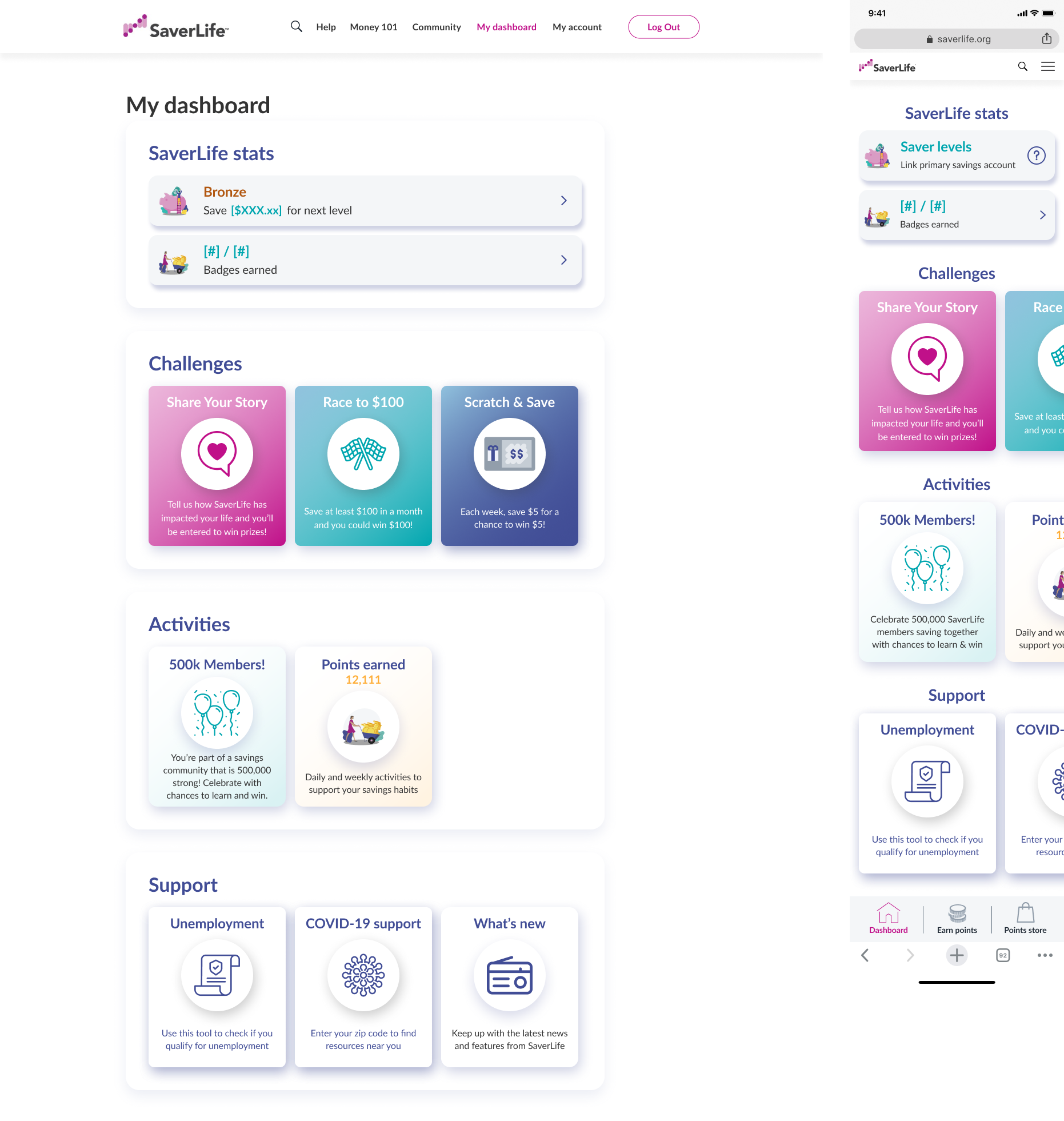
The dashboard became every member’s first screen
Scannable visuals and hierarchy
Dedicated sections for points, goals and education
New cards inviting members to earn points and set goals
New mobile navigation, shipped a week after MVP
Early issues we tracked
The savings goal card lagged
“What’s new” needed manual updates
Tall cards limited room for new sections
The analysis
Our strongest retention lever was invisible
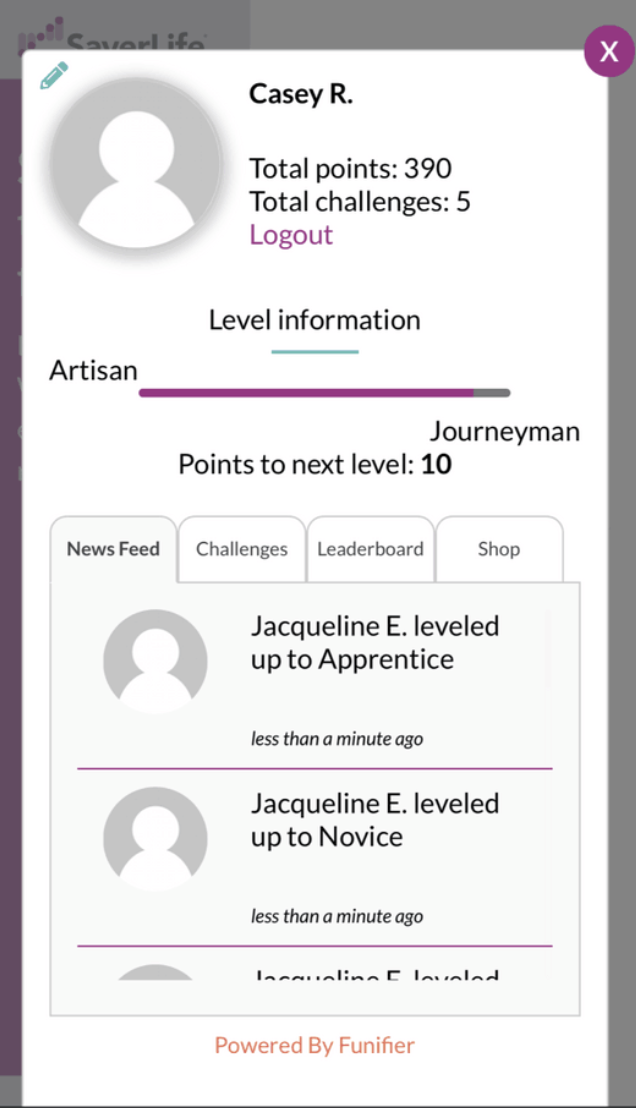
Points lived in a third-party widget, reached through the desktop top nav or the mobile hamburger menu, disconnected from the rest of SaverLife.
What members told us
They didn’t know how to earn points
They didn’t know when they’d earned them
They didn’t know what points were for
Many didn’t know points existed
Where points were hidden
Desktop · top nav
Lost among other navigation items.
Mobile · hamburger menu
Buried two or more taps deep.
Third-party widget
Visually disconnected from SaverLife.
The opportunity
Make points, activities and rewards impossible to miss.
The solution
An activity system built for daily and weekly loops
Activity types
Daily
Read an article, log a thought, check a savings tip
Weekly
Save $5, review your budget, engage with content
One-time
Complete your profile, link a bank, set a first goal
Points store
A clear catalog of rewards to redeem
Refined notifications confirmed completed activities and points earned.
Early signals
What we watched
Some one-time activities didn’t register: the API issues we’d expected
“Log your budget” and “Post on forums” drove completions, not engagement
Promising signals
More members reading articles, a strong retention predictor
Growing adoption of the “$5 weekly save”
10–20 minutes per visit on average
Key learning
The system worked. Next we had to tune which activities drove real behavior, not just completions.
After launch
We kept testing after launch
Navigation updates
Navigation grew with themed activities so discovery kept scaling.
Themed activities
Monthly topics and promotions kept the activities fresh.
04
Results
Habits that held for a year
The results
Retention sustained
~20% vs ~10%
Weekly active users
~2.5x
Key validation
The gains stabilized over 12 months: real habit formation, not novelty.
The habit pattern
10–20 min
per visit
2–3 times
per week
Same routine
every visit
Why members kept coming back
“Aha” moments
Winning money or learning something new shaped how they saw SaverLife.
Little nudges
“I already knew I should save, but this made me actually do it.”
Real learning
Engaged members cared more about financial literacy, not just points.
Accountability
Gamification brought back even members who “already know this stuff.”
What this validated
Mental model shift
From “a lottery” to “my weekly savings check-in.”
Dual requirement
Habits need capability (education) and motivation (gamification).
Structural impact
Visibility plus a recurring cadence made the change last.
05
Reflections
What surprised me
Members didn’t talk about gamification. They said the activities “reminded them to think about saving” and “gave them permission to feel proud of small progress.”
Design implications
Context over complexity
Seasonal themes and life events can beat sophisticated personalization.
Permission to act
People know what to do; they need cues and validation to do it.
Small wins matter
Pride in small progress motivated more than point totals.
How I adapted
Adaptation 1
I folded enhancements into new initiatives instead of waiting for dedicated projects, so we kept making progress.
Adaptation 2
I kept tracking data and open questions, so I brought evidence, not opinions, to roadmap discussions.
If I could do it over
I’d push for dedicated bi-weekly iteration sprints instead of fitting improvements between other work.
Key learning
Consistently bringing data and user insight to the table earns influence over the roadmap, even without perfect conditions.